


Hearing Loss and Ways to Treat It
Abstract:
Background and Objective:
Hearing is one of the most vital sensory abilities in humans. When impaired or damaged, it requires treatment and attention to prevent the risk of deafness. This article aims to review the results of studies on the effects of hearing disorders or damage and their treatment.
Methods:
In this article, studies and theories that examined the impact of hearing damage and disorders and treatments for them were reviewed. For this purpose, 9 articles extracted from the SID database were used. The keyword “hearing loss” and related terms were used for the search.
Conclusion:
Hearing damage or disorders, due to their effects on the human body, make it necessary to seek treatments to prevent or address these conditions as much as possible. These impairments affect daily life and work, causing disruption and making life harder for the individual.
Keywords: Hearing damage – Treatment – Hearing loss – Auditory neuropathy – Consanguineous marriage – Cochlear implant
Introduction:
There may be a direct relationship between consanguineous marriage and hearing loss in patients. In such cases, patients seek treatment at cochlear implant centers. Among every 1,000 births in developed countries, 1 to 3 children suffer from sensorineural hearing loss, the most common sensory-neural defect, which can result from genetic or environmental factors. The incidence in developing countries is even higher. Although most hearing impairments are reported in Asian children, accurate statistics on deafness and its causes in Iran are not available.
Sensorineural hearing loss can be categorized into two main groups: genetic and environmental. Genetic hearing loss often results from cochlear malformations due to genetic defects and may manifest at birth or develop later. It is classified into syndromic and non-syndromic types. In syndromic types, hearing loss is conductive and accompanied by other bodily disorders, accounting for about 30% of cases. In non-syndromic types, which are sensorineural and not accompanied by other disorders, the figure is about 70%. Non-syndromic hearing loss includes mitochondrial, X-linked, and autosomal types. Over 150 gene loci and more than 89 genes linked to hearing loss have been identified. The risk of hereditary diseases, such as hearing loss, increases significantly in offspring of consanguineous marriages.
Another factor that causes hearing loss is noise from some industrial sectors, where hearing protection devices are used to reduce the risk. Noise is one of the most common harmful physical agents and a major risk factor in workplaces, threatening workers’ health. Occupational noise is a major cause of disability and hearing loss globally. For instance, in New Zealand, it causes an annual compensation cost of $53 million, which continues to rise. Engineering and systematic controls, like eliminating noise at the source and isolating workers, are primary strategies but are often costly, impractical, or impossible. Hearing protection devices are thus used to reduce workers’ exposure.
Presbycusis is another factor affecting hearing function, evaluated in hearing centers. Aging is inevitable. Harold Chackent writes in his book “Pathology of the Ear” that aging begins at conception and continues until death. Studies show that presbycusis is common in individuals aged 60 and above and is one of the most prominent ENT disorders among the elderly. It is the most common type of sensorineural hearing loss in the US. Age-related gradual hearing loss affects speech comprehension, particularly in noisy settings. This decline impacts quality of life and leads to mental, physical, and social consequences, which worsen over time. Hearing also affects cognitive performance, including learning retention, which diminishes with age.
Auditory-verbal memory refers to the ability to receive, process, and store verbal stimuli and recall them. This type of memory is crucial for proper function and is often reduced before the onset of dementia. It is a strong predictor of Alzheimer’s or dementia in the elderly. Therefore, age-related hearing impairment may be a precursor to Alzheimer’s.
Auditory neuropathy is another disorder where the peripheral hearing system appears normal, but the eighth nerve and brainstem are impaired. About 10% of patients with this condition show normal otoacoustic emissions and cochlear microphonics, but their brainstem responses and the eighth nerve are absent or severely impaired.

The most common features of auditory neuropathy include:
– Hearing loss of varying degrees, sometimes unpredictable, from mild to profound.
– Poor speech comprehension, especially in noisy environments.
– In audiograms, fluctuating hearing loss that can vary daily or even hourly.
– Typically bilateral hearing loss, though sometimes asymmetrical or even unilateral.
– Hearing loss may be stable, progressive, or improving (usually before age 2).
Causes include:
– Oxygen deprivation at birth
– Certain infections like mumps
– Immune disorders
– Neurological disorders like Charcot-Marie-Tooth syndrome
– Genetic predisposition (e.g., affected siblings)
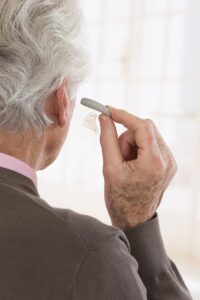
Advancements in treatment include cochlear implants. This technology helps children with severe to profound sensorineural hearing loss who cannot benefit from hearing aids to engage with complex acoustic stimuli, improving their language, social, psychological, and educational development.
A study conducted from May 2005 to October 2007 on 190 adults (380 ears) aged 30–100 in Tehran evaluated presbycusis and its effects on hearing performance. The audiology department of Iran University of Medical Sciences has also conducted case studies on auditory neuropathy and cochlear implant effects on cortical plasticity in children with congenital hearing loss, involving 42 children (22 boys and 20 girls).
Alternative Method:
This review article was developed by selecting 5 out of 200 relevant studies on the SID site. It was conducted at the cochlear implant center in Isfahan from spring 2017 to spring 2018. One study examined the link between consanguineous marriage and hearing loss in patients visiting this center. Another was carried out in 3 manufacturing companies with 5 high-noise units, investigating the use of hearing protection devices to understand the risk of noise-induced hearing loss.
Conclusion:
Hearing sensitivity gradually and progressively declines with age. Although presbycusis is widely accepted as a physiological consequence of aging, other factors such as environmental noise, ototoxic drugs, and illness also impact the auditory system. This study aimed to identify and control internal and external factors affecting hearing health through interviews and analyses. Hearing damage and genetic disorders negatively affect daily life and work, making life harder. We explored treatment options like hearing aids and cochlear implants, which can significantly improve the quality of life, especially for the elderly and children.