


تیم تخصصی سایه گستر سلامت • Oct 10, 2026
Comprehensive Guide to HD Scalp Vein Sets: Clinical Uses, Gauge Standards, and Best Practices
Intravenous therapy and diagnostic venipuncture are fundamental pillars of modern clinical healthcare. However, establishing peripheral venous access in patients with fragile, collapsed, sclerosed, or pediatric veins presents a continuous challenge for clinicians. In clinical practice, the HD Scalp Vein Set (High-Definition Winged Infusion Butterfly Needle) represents the gold standard for precise, atraumatic, and patient-centered vascular access.
This comprehensive guide details the biomedical engineering, ISO color-coded gauge classifications, clinical indications, step-by-step venipuncture protocol, and complication prevention strategies for healthcare professionals.
1. What Is a Scalp Vein Set and Why Is It Called "Butterfly"?
A scalp vein set, widely recognized in clinical environments as a Winged Infusion Set or Butterfly Needle, is a specialized vascular access device designed for short-term intravenous administration and blood drawing.
[!NOTE] The term scalp vein originated in the mid-20th century when the device was primarily developed to access the delicate, superficial veins of the infant scalp. Today, due to its exceptional maneuverability and gentle insertion characteristics, its usage has expanded across all age groups, including geriatric, oncology, and hematology patients.
The dual flexible lateral wings resemble butterfly wings, giving clinicians superior finger-grip stability and pitch control during insertion, followed by a flat profile that adheres cleanly to the patient's skin.
2. Biomedical Engineering Anatomy of HD Scalp Vein Sets
High-Definition (HD) scalp vein sets are manufactured with ultra-strict medical standards and consist of four integrated components:
- Siliconized Medical Stainless Steel Needle (SUS304): Engineered with high tensile strength to prevent bending during insertion. The needle tip features an ultra-sharp triple-bevel geometry coated with a biocompatible silicone lubricant, lowering tissue penetration drag by up to 40% and minimizing patient discomfort.
- Ergonomic Color-Coded Butterfly Wings: Formulated from non-toxic, medical-grade flexible PVC. Textured with micro-grooved grip surfaces to prevent slippage even when handling with examination gloves.
- Kink-Resistant Extension Tubing: Ranging typically from 20 cm to 30 cm in length. Highly transparent to allow instantaneous visualization of venous blood flashback upon lumen entry. DEHP-free formulation ensures complete chemical compatibility with sensitive pharmaceutical solutions.
- Female Luer-Lock / Slip Connector: Secured with an airtight protective cap to maintain absolute sterility, accommodating syringes, IV infusion sets, and vacuum collection tube holders (Vacutainers).
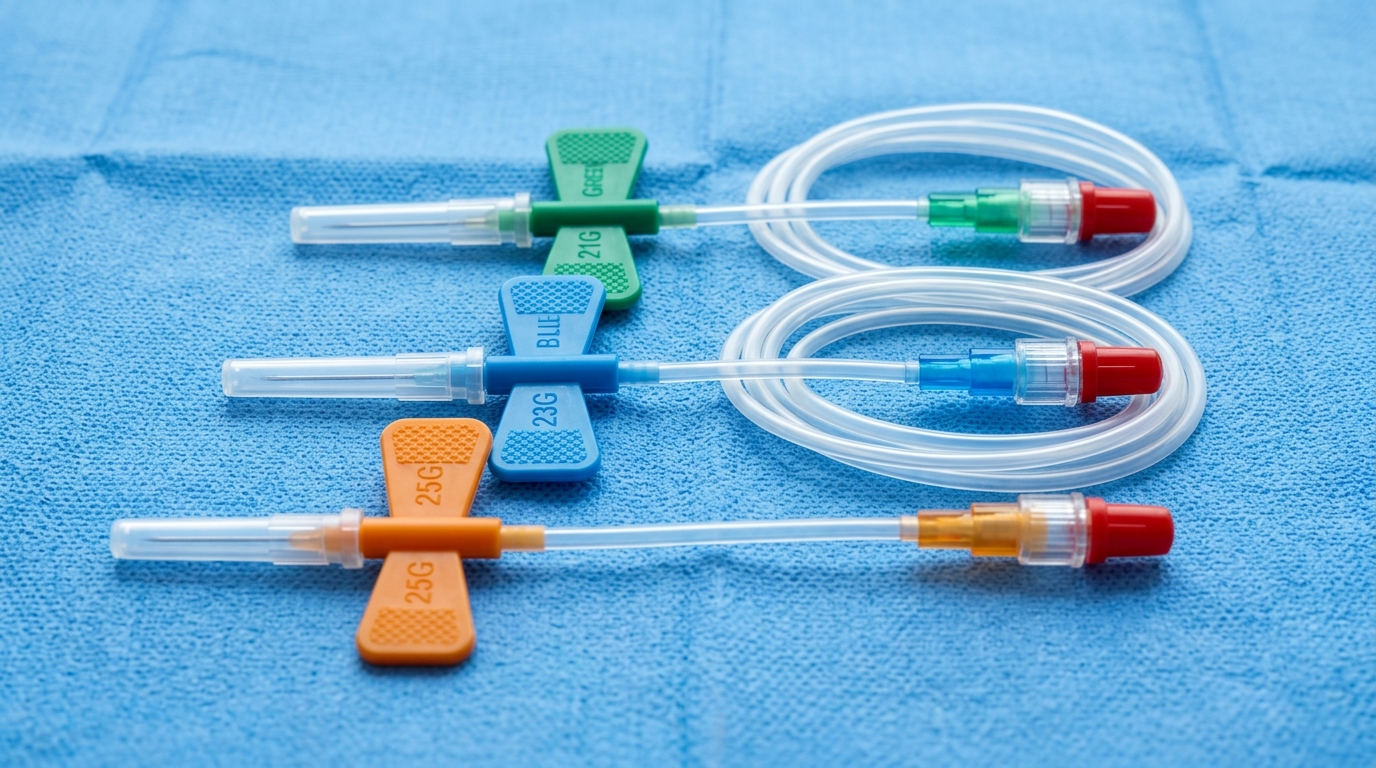 ISO Gauge Color Coding and Sizing Chart for HD Scalp Vein Sets
3. ISO Standard Sizing and Color-Coding Gauge Chart
Selecting the appropriate needle gauge relative to the vessel caliber and fluid viscosity is essential for successful venipuncture and the preservation of endothelial integrity:
| Gauge (G) | Color Identifier | Outer Diameter (mm) | Primary Clinical Indications |
|---|---|---|---|
| 19G | Cream / Ivory | 1.1 mm | Rapid blood transfusions, emergency bolus resuscitation, high-viscosity infusions |
| 21G | Green | 0.8 mm | Routine adult diagnostic venipuncture, IV hydration, general inpatient pharmacotherapy |
| 22G | Black | 0.7 mm | Moderate-caliber veins, fragile vessel walls, intermediate outpatient therapy |
| 23G | Blue | 0.6 mm | Standard choice for pediatric, geriatric, oncology, and delicate forearm/hand veins |
| 25G | Orange | 0.5 mm | Neonatal access, capillary-sensitive blood draws, highly fragile and collapsed vessels |
| 27G | Grey | 0.4 mm | Specialized NICU and neonatal micro-sampling applications |
[!TIP] The 23G (Blue) and 25G (Orange) models are the most frequently requested sizes in oncology and outpatient phlebotomy units due to their minimal vessel displacement and high first-stick success rates.
4. Clinical Comparison: Scalp Vein Sets vs. IV Cannulas
Clinicians often weigh whether to deploy a winged infusion set or a peripheral intravenous cannula (IV cannula):
- Precision and Mechanical Shock Isolation: Because the operator handles the wings while the syringe connects via the extension tubing, mechanical vibrations and push-pull forces from syringe swapping are not transmitted to the needle tip inside the vein, drastically reducing hematoma risk.
- Indwelling Duration: Scalp vein sets feature a rigid metal needle and are indicated strictly for short-term procedures (single-dose infusions, blood sampling, or infusions under 2–4 hours). For continuous, multi-day inpatient stays, a flexible polyurethane IV cannula is preferred.
- Multi-Tube Blood Sampling: Paired with an evacuation needle holder, butterfly sets are unmatched for drawing multiple vacuum tubes smoothly without moving the needle within the vein.
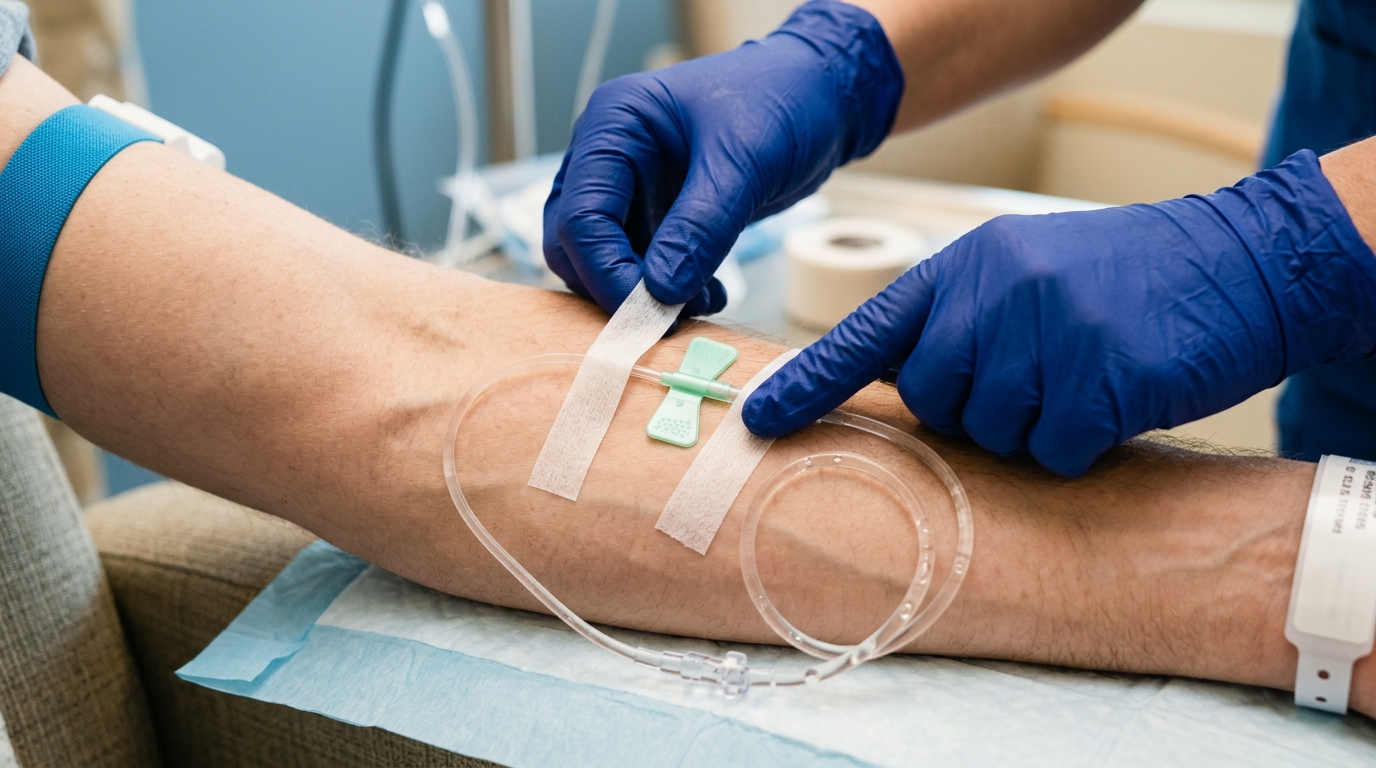 Clinical Venipuncture Protocol with Winged Infusion Butterfly Needle
5. Step-by-Step Atraumatic Venipuncture Protocol
To optimize clinical outcomes and ensure patient comfort, follow these procedural steps:
- Site Preparation and Asepsis: Apply a tourniquet approximately 10 to 12 cm proximal to the target puncture site. Cleanse the skin with a 70% isopropyl alcohol or 2% chlorhexidine swab in an outward circular motion and allow to air-dry completely.
- Wing Positioning: Pinch the dual butterfly wings upward between your thumb and index finger, ensuring the needle bevel is facing upwards.
- Low-Angle Insertion: Introduce the needle into the vein at a shallow 10° to 15° angle. Immediate blood flashback into the clear extension tubing confirms correct intraluminal positioning.
- Wing Flattening and Stabilization: Lower the needle angle parallel to the skin surface, release the wings, and lay them flat against the patient's forearm.
- Securement: Apply sterile adhesive paper tape or a transparent semipermeable dressing across the wings. Release the tourniquet and initiate smooth infusion or collection.
6. Complication Management and Safety Best Practices
- Hematoma Prevention: Puncturing through the posterior venous wall can result in subcutaneous blood extravasation. Utilize a smaller gauge (23G/25G) in delicate veins and maintain gentle dry pressure over the puncture site for at least 2 to 3 minutes post-removal.
- Phlebitis and Endothelial Irritation: Avoid leaving metal-needle devices indwelling beyond single-session procedures.
- Sharps Safety & Disposal: HD scalp vein sets are single-use devices sterilized with Ethylene Oxide (ETO) gas. Dispose of the set immediately into an approved puncture-resistant sharps container without recapping the needle.
Summary
The HD Scalp Vein Set bridges high-precision micro-engineering with clinical ergonomics, offering an atraumatic solution for difficult vascular access and blood collection. Sayeh Gostar Salamat supplies verified hospital disposables and clinical medical equipment meeting international CE and ISO quality standards to healthcare centers across the country.