


The Order of Orthodontic and Implant Treatment: Which Comes First?
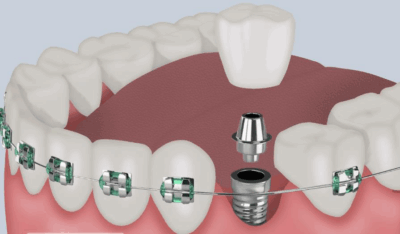
Dental implants are a permanent solution for replacing missing teeth, restoring a beautiful and complete smile. On the other hand, orthodontics improves the alignment of teeth, enhancing both aesthetics and jaw function. When a patient needs both treatments, a critical question arises: Which should be done first?
In this article from Sayeh Gostar Salamat, we answer this important question and explain why the sequence of implant and orthodontic treatment is so crucial.
Understanding Implants and Orthodontics
Before making a decision, it’s essential to briefly review how both treatments work:
- Dental Implants: A small titanium post surgically placed in the jawbone. This post acts as an artificial tooth root and, after fusing with the bone (osseointegration), a permanent crown is placed on top. An implant is completely fixed and immobile.
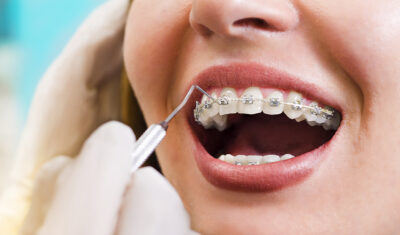
- Orthodontics: A treatment that uses tools like braces and wires to gradually move teeth into their correct positions. The goal of orthodontics is to correct jaw and dental problems like crowding, misalignment, or gaps between teeth.
Why Is the Order of These Treatments Important?
The main reason for the sensitivity of this topic lies in the difference in the nature of these two treatments:
- Natural Teeth are Mobile: Our teeth can be slowly moved by the pressure from orthodontic braces.
- Implants are Fixed and Immobile: After an implant fuses with the jawbone, it will never move.
For this reason, you cannot place an orthodontic bracket on an implant and expect it to move. This is why deciding on the priority of implant or orthodontics is vital.
The General Rule: Orthodontics Before Implants
In most cases, dentists recommend that orthodontic treatment be done first, followed by dental implant placement. This sequence is the most logical and successful way to achieve the best outcome. The reasons for this priority include:
- Creating Proper Space: Orthodontics allows the dentist to move teeth into their correct positions and create an ideal and sufficient space for the implant. If this space doesn’t exist, the implant may be placed at a wrong angle or damage the roots of adjacent teeth.
- Aligning Adjacent Teeth: In many cases, orthodontics is necessary to align the roots and angles of the teeth next to the empty space. This helps ensure a more precise and correct placement of the implant.
- Improving Overall Oral Health: Orthodontic treatment also facilitates oral hygiene and creates a healthier environment for implant placement.
The Exceptions: Implants Before Orthodontics
Despite the general rule, there are very specific circumstances where an implant may be placed first:
- Acting as an Anchor: In cases where an implant needs to serve as a stable anchor for moving other teeth, it may be placed earlier.
- Urgent Aesthetic Need: If the missing tooth is in a visible area and the patient wants to fill the gap quickly for cosmetic reasons, a temporary or permanent implant may be placed first after consulting with a specialist.
- No Movement Needed for Surrounding Teeth: If the teeth around the empty space are already straight and don’t need to be moved, the implant can be placed earlier.
However, this decision is entirely dependent on the diagnosis of the orthodontist and implant surgeon.
Can Orthodontics and Implants Be Done Simultaneously?
In some specific situations, performing both treatments simultaneously may be possible. However, this is a complex treatment approach and is only feasible under the close supervision of a specialized dental team. In these cases, a temporary implant might be used, or braces might be placed on other teeth to prevent damage to the implant during the healing period.
Important Post-Treatment Care
Regardless of the treatment order, adhering to post-operative care is essential for long-term success:
- Oral Hygiene: Regular brushing, flossing, and using mouthwash to prevent infection and decay.
- Implant Care: Avoiding hard foods and harmful habits during the initial healing period.
- Use of a Retainer: After orthodontic treatment is complete, be sure to use a retainer as instructed by your doctor to stabilize the teeth’s position.
- Regular Check-ups: Visit your dentist regularly to check the status of your implant and teeth.

Conclusion: Expert Consultation Is Key
The order of orthodontic and implant treatment is an individual decision that depends on each patient’s specific jaw and oral conditions. In most cases, orthodontics is done first to prepare the best conditions for the implant, but in exceptional circumstances, the implant may take priority.