


Steps from Tooth Extraction to Dental Implant Placement

Losing a tooth can significantly affect your smile, self-confidence, and chewing ability.
That’s why dental implants have become the best replacement option for missing teeth.
But the main question is: how long after tooth extraction can a dental implant be placed, and what steps are involved?
Steps from Tooth Extraction to Implant
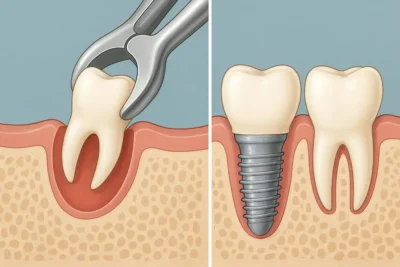
1. Initial Examination and Treatment Planning
Before extraction, the dentist evaluates jawbone density, gum health, and overall patient condition to determine the best timing for implant placement.
2. Tooth Extraction
The tooth is extracted with minimal damage to the surrounding tissues. Maintaining bone and gum health is crucial at this stage.
3. Determining the Right Time for Implant Placement
- Immediate Implant (Type I): Placed right after tooth extractio.
- Early Implant (Type II): Placed 4 to 8 weeks after extraction.
- Delayed Implant (Type III): Placed 12 to 16 weeks after extraction.
- Late Implant (Type IV): Placed more than 16 weeks after extraction, usually requiring bone grafting.
4. Implant Placement
The implant fixture is surgically placed into the jawbone, followed by a healing period for osseointegration.

5. Crown Placement
After healing, a crown is attached to the implant to restore function and aesthetics.

Key Factors for Implant Success
- Overall health (no uncontrolled diabetes, no smoking or alcohol)
- Proper oral hygiene
- Adequate bone density and quality
- Choosing a skilled and experienced implant dentist
Conclusion
The best time for implant placement is usually 2 to 4 months after tooth extraction.
During this period, the bone and gums are in the optimal condition for implant success.
With the right dentist and high-quality equipment, implant success rates can reach up to 97%.
Sayeh Gostar Salamat | Importer of Medical and Dental Equipment